
Interested in releasing your song together with a professional artist?
More details on this revolutionary new program are coming soon. Just let us know your email address below and we'll update you shortly.

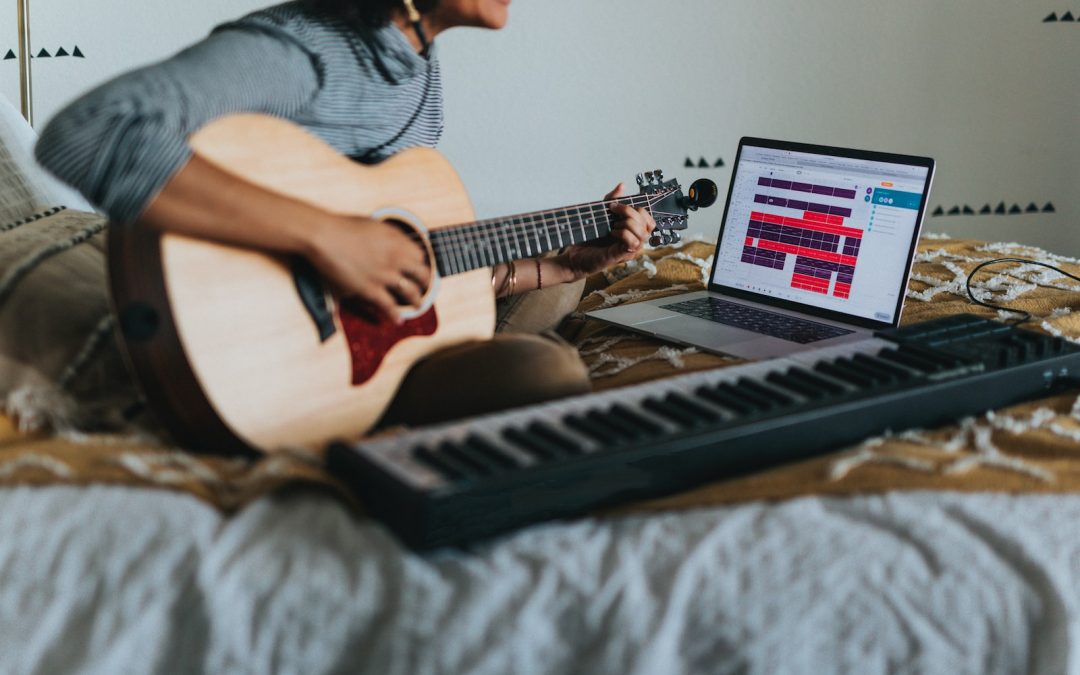
Writing a song is a huge accomplishment—one of those things very few people will ever do in their lifetime. But writing a song is just the beginning of a much longer journey.
Some have written hundreds of songs and never took the next step: recording a demo.
A demo is a professionally recorded track that takes the lyrics you’ve written and puts them to music.
Most songwriters already have an idea of what they’d like their song to sound like. If that’s you, all you have to do is record a worktape (a rough version of your song being played and sung) using a personal recorder, phone mic, etc.
From there, someone can use that song to create a number chart (kind of like sheet music for studio musicians), record the demo track, and have a professional singer lay down vocals.
There are a few reasons you might want to do this if you are a songwriter.
You may want to hear a professional version of your song.
Sometimes, it’s cool just to hear a professional version of something you’ve written! I will never forget the first time hearing one of the songs I had written after it was recorded by professionals.
I had done plenty of recording on my own, but there was nothing like hearing it with a fresh take on the music. That’s a perfectly legitimate reason.
You may want to pitch your song to professional artists.
One of the most common reasons for recording a demo is to pitch the song to professional artists.
It is quite difficult to get your song in front of well-known artists (and to be honest, even lesser-known artists). The reality is, they are bombarded with requests to record new music from multiple directions week in and week out.
When you do have something to offer, then, you must absolutely put your best foot forward. If you have a chance to share your song with an artist, ideally, you will presented them with a professional, polished version that helps them hear the song how you truly intended.
If all they have is lyrics in front of them, or a low quality recording you made yourself, it is highly unlikely they will take the time to consider your offer.
You may want to make your song available for others.
Maybe you don’t have lofty goals of having your song recorded by a popular artist. Even so, you’d like for someone to have the chance to find your song and use it.
Ultimately, this will be an issue of exposure. There are not many places where you can publish a demo version of your track for bands/groups, soloists, church performers, etc., to find your track.
This is where BuyDemoTracks.com comes in. We can place your demo in front of performers who are actively looking for new music, and even pay you royalties each time someone requests to download your track. Learn more here.
Yes, you can. However, whether or not you should will depend upon a variety of factors.
If you have extensive music industry experience, a professional recording setup, and the contacts necessary to get your music in front of the right people, this is absolutely something you can do yourself.
If you don’t have any of the above, it could be a better investment of your time and money to have professionals record the demo for you.
This will ensure the demo is the quality you need it to be in order to gain the attention of potential artists.
When it comes to choosing a studio or a musician to record your music, there’s good news and bad news.
The good news is there are a lot of options to choose from. Many reputable musicians have home studio setups, and there are many full-time professional studios that would be happy to record for you.
The bad news is that, even if you have a professional demo recorded, there is still no obvious bridge from having the demo recorded to pitching the song to potential artists.
Also, the many options could be overwhelming. Who should you choose? How can you be sure they are the right fit for your demo?
BuyDemoTracks.com was actually created to solve both issues. We work with an extensive list of professional studio musicians and manage the process from end to end.
Then, after the demo is recorded and you are happy with the finished product, we will place your song in our online catalog visited regularly by established, up and coming, and occasional artists and performers alike.
This process does not have to be a mystery. If you’ve written a song and are ready to request a demo recording, click here to get started.

Songwriting Tips
Songwriting Essentials: Tools and Online Resources
Before you get started, or while you’re in the process, there are a few things that can help make your life a little easier. Thanks to modern technology there are many incredible resources you can find right here online to help you when you’re writing a song. You may be stuck on a certain word or phrasing and you’re not sure where to go. We’re here to help! You don’t need a lot to get started, but there are a few resources that will help you while you’re trying to pen your song. Whether you’re starting your very first song or you’re an established songwriter, there are constantly new resources to help you. In this article, I’m going to explain the many different free resources and how they can benefit you!
Tools:
Pen & Paper:
Everyone has their own way of writing. Some people prefer to type on their computers and/or phones, but others prefer the traditional way of writing with just pen and paper. There is no right or wrong way to write a song, but I find jotting down random ideas I get throughout the day on paper helps jumpstart the writing process.
Voice Recorder:
We’ve touched on voice recorders and their importance in previous blog posts, but I want to show you just how easy it is to make a worktape straight from your phone. If you have an iPhone you have an app called “Voice Memos” built right into your device! If you have an Android you also have an app built into your phone labeled “Voice Recorder”! If you’re unable to find it, there are plenty to choose from the Google Play Store and Apple App Store. If you have a computer that you use, you should be able to find a voice recorder built into your computer. If you still can’t seem to find a way to voice record, or just prefer the old-fashioned way, there are many options available for purchase in stores or online.
Online Resources:
BuyDemoTracks.com:
BuyDemoTracks.com will be your best online resource to use. From songwriting workshops, blogs to help improve your skill, creating custom demos, and promoting your song to potential recording artists, BuyDemoTracks.com has all the tools you need to get started on your songwriting journey!
Workshops:
Songwriting workshops are a great source to help you when trying to pen your song. You can find amazing songwriting workshops hosted by award-winning songwriters right here on Buydemotracks.com! You’ll learn different ways to improve your skill from some of your favorite songwriters from all kinds of different genres of music. Check out our website to learn more!
Songwriting Glossary:
It’s very important that you understand certain words and their meanings. We have written a blog post that explains all of the essential words you need to know, but if you need to know anything more check out https://songchops.com/2021/06/songwriter-glossary/
Dictionary:
Dictionary.com is my most used online resource! I cannot tell you how many times when writing a song I put a word I think fits perfectly, but when I check the definition it doesn’t mean what I thought it meant at all! That is where the dictionary comes in handy.
Thesaurus:
This one is pretty much a given, but thesaurus.com is going to be your best friend! When you go to the website, you’ll see the search bar and you can search for either the synonym of the word you’re looking for or an antonym. So many times you’ll be making a lot of progress on a song, but all of a sudden you’re missing that one word you need. On thesaurus.com you will be given a list of words to use and you’re able to select exactly what you were needing.
RhymeZone:
A solid rhyme scheme is essential to writing a great song. Sometimes you can forget rhyming words and that is where rhymezone.com comes in! All you do is type in the word you need to rhyme and search away! They have many different search options you can take advantage of that are guaranteed to help you get out of your writer’s block and carry on writing your song!
Master Writer:
https://masterwriter.com/ is a software program dedicated to writers of all kinds! It contains many different tools that can help you.
Performing Rights Organizations:
https://www.ascap.com/, https://www.bmi.com/, and https://www.sesac.com/ are 3 different “PROS” and the purpose of a PRO (performing rights organization) is they are responsible for collecting income for songwriters and publishers when a song is publicly broadcast or performed.
There are so many more resources and tools to help you on your songwriting journey. Always seek out new and improved software, tools, and anything that might assist you if you need a little extra help when you’re ready to write your next song.
When I write, there are a few priorities I focus on that will have a major impact with the song. On the top of the list is “pouring emotion into your song”. I want the listener to “feel something” when they hear it.
If they do, I feel I have succeeded at some level. That emotion is transferred from the writer, to the singer, to the listener. I’m never really concerned all that much about song mechanics, perfect rhyming, being structurally correct and all that stuff. I want the song to be real and believable. That’s why I mostly write about what I know and familiar with. Real life dramas, real life experiences. Write the truth. Be conversational. Write as you speak!
One example of that was a song I wrote a few years back entitled “Looks Like Up To Me”. It’s based on a book I once ready by Mississippi author Eudora Welty. The story line is about the plight of the south after the Great Depression. Those were the hardest of times and folks were struggling just to survive. They basically had nothing, and things got so bad they could hardly get much worse. I was totally captivated and moved by what I read. That spawned the line “Been down so long, it looks like up to me”…..which became the battle cry of my song. I attempted to tell their story, pouring as much emotion and feeling into the song as I could muster.
It actually took me years to write, with several incarnations, before I felt I effectively captured the spirit of the song. Here are the lyrics, and if there was one thing I would want to impart to all writers, it would be: ‘Write what you feel, feel what you write”.
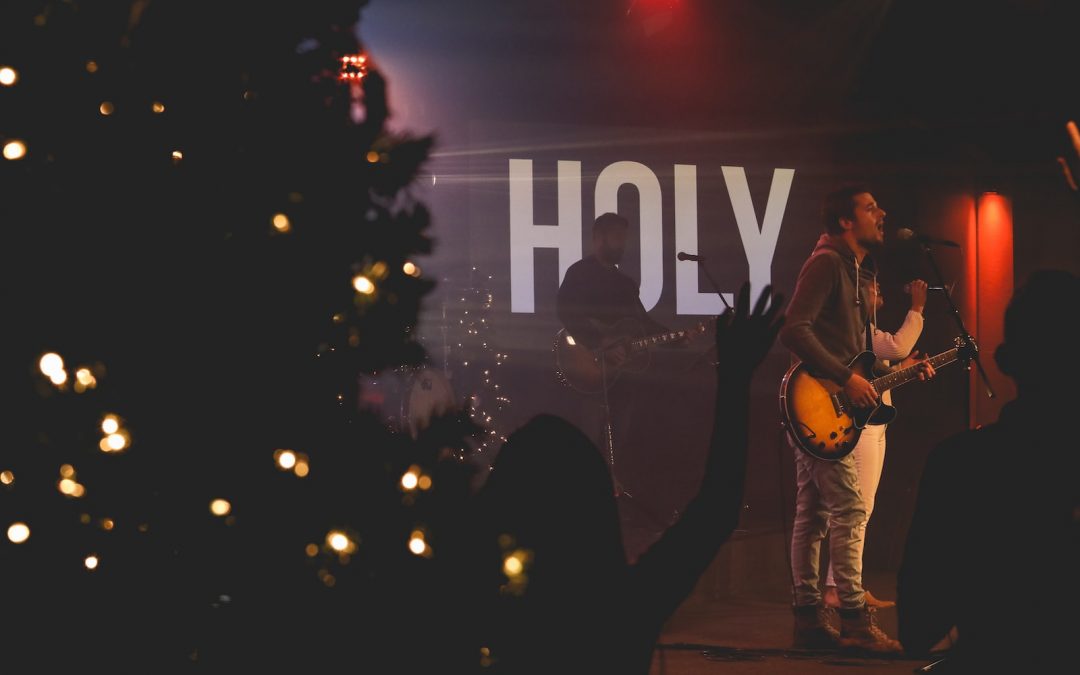
I have always been a big fan of Christmas music since childhood, especially all the Christmas classics most of which were written in the 30’s, 40’s and 50’s. To this day millions of people play them over and over during the Holidays….and never seem to tire of them. There is a “timeless” quality to songs like “White Christmas” and “Let It Snow, Let It Snow, Let It Snow”. They have become, over time, part of the fabric of our society.
About 20 years ago I thought to myself, man we need some new Christmas songs….maybe I can take a stab at writing some. I explored the existing Bluegrass Christmas song catalog, and came across very few, “Christmas Time’s A Comin'” by Tex Logan being one of the most notable. I started spending time trying to come up with new Christmas/Seasonal themes that had not been done before. It was incredibly hard! None-the-less I was determined to come up with some fresh ideas, bring something new to the table.
My very first Christmas tune was called “I Dreamed I Was There”. It was an incredible breakthrough for me personally. I kept at it, and over time wound up with a catalog of about 30 original
Christmas/Seasonal songs. I would block out a few weeks after The Holidays each year focusing on writing new Christmas songs, adding to my growing catalog. Back in 2003 I recorded and released by very first Christmas Album “The Season Of My Heart”, that featured 14 of my home-made Christmas tunes. The response was fantastic, and the album was voted one of the top 25 Holiday music releases of 2003.
I couple years ago I released my 2nd Christmas CD “That’s What I Love About Christmas”. A contrast to my earlier release, this one has the feel of some of the early Christmas Classics. We recorded ten of my new original Christmas tunes, with the help of some great Nashville area musicians and vocalists. The end result exceeded any expectation I had, the title cut winning an award for the IMEA Christmas song of the year.
If you are a songwriter and a fan of Christmas music, you might consider giving it a try yourself. The world needs new Christmas songs to keep the music fresh, and help us to celebrate the Holiday traditions we hold dear. If you do, here are a couple thoughts I’d like to share on the subject.
I’ll leave you with the lyrics to a reasonably new Christmas tune I wrote entitled “Home-Made Christmas”. I had been thinking back to my childhood days and the excitement my brothers, sisters and I shared as we looked forward to our upcoming Christmas season. I remembered times when our family was pretty destitute and didn’t have the money to buy nice gifts for each other. That never discouraged us, we all made home-made things for each other with whatever we could find. Some of our most memorable Christmas’ were the ones where we exchanged our home-made gifts….because they were made with love.
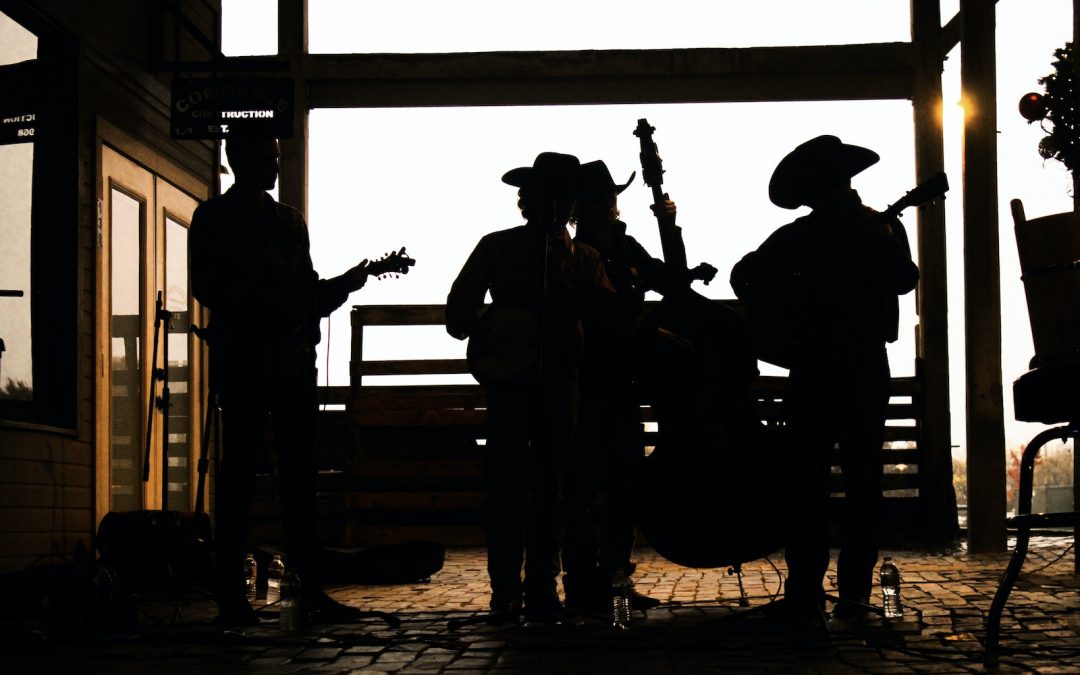
Ever since I got the songwriting bug back in the mid 1980’s, writing Gospel music has been very important to me. I’ve always been a man of Faith, and became fascinated by some of the Bluegrass Gospel songs I’d hear on recordings and at festivals back in those days. Bands like Doyle Lawson and the Bluegrass Cardinals, among others, were putting out some great stuff and were a big influence on my early writing. It was that Southern Gospel sound that really did it for me, and inspired me to write in that style.
My approach to writing Spiritual Songs was to try and come with new ideas/song concepts/musical settings that didn’t sound like every other Gospel song I’d heard before. Needed to be original and innovative to a certain degree. It took a great deal of patience and exploration to create my own unique style of writing Gospel….establish my own identity…..but the hard work paid off.
By 1988 I was pitching some of my songs to a few of my favorite Bluegrass bands, and caught a break when the Lonesome River Band recorded a bluesy Gospel number I wrote entitled “Listen To The Word Of God”. Dan Tyminski sang lead, and guest artist Alison Krauss played fiddle on that cut. Definitely a highlight moment for me as a songwriter. That album “Carrying The Tradition” went on to be awarded IBMA album of the year.
As my catalog of Gospel number grew over time, I decided I’d like to record a Gospel album of my own, featuring songs that no one had recorded yet. It would be an opportunity to express my own Faith through the songs I’d written, and spread the Holy Word of God to the rest of the world.
Jesse Brock and John Miller agreed to produce the recording and we were fortunate to attract a cast of wonderful musicians and vocalists that included Russell Moore, Dale Ann Bradley, Jeff Parker, Barry Scott, and Junior Sisk among several others. The end result exceeded any expectation I had, and helped land my first record deal with Rural Rhythm Records who were pretty hot at the time. Titled “Look To The Light”, the album went on to be nominated for IBMA Gospel Event Of The Year as well as a GMA Dove Award. The album received a great deal of radio airplay, including SIRIUS XM, and folks all across the country wrote and e-mailed me heartwarming notes about how they were “moved” by listening to this collection of spiritual songs. That was very gratifying for me personally.
Another highlight in my career as a songwriter was the release of my 2nd Gospel album Gonna Sing, Gonna Shout in the fall of 2018 on the newly established Billy Blue Records label. Like all my releases the songs on the CD are ones I either wrote or co-wrote with some of the top writers in Bluegrass. The title track was awarded 2019 IBMA Gospel Recording Of The Year and the entire album received a Grammy Award nomination for Best Roots Gospel Album.
As a songwriter this was one of the most rewarding experiences of my life.
Attending the Grammy Awards as a nominee is something I never thought possible and is something I will treasure always.
In recent years I’ve done more collaborating with other writers all over the country, and ironically many of the resulting songs have been Gospel tunes. I can’t help but feel I was meant to write Gospel music, that it is my calling. Have been blessed with cuts by some of my favorite artists including: IIIrd Tyme Out “Just Call On Him”, Larry Stephenson “Best Laid Plans”, Sideline “When The Son Rose Up That Morning”, Daryl Mosely “Do What The Good Book Says” and “He’s With Me”, Rick Faris “See You On The Other Side”
God willing, I hope to record another Gospel album as a follow up to “Gonna Sing, Gonna Shout” someday. As my mom would say: ” If it was meant to be, it will happen”.
Don’t know what the future holds, but will keep writing Gospel music as long as I can hold a pen in my hand.
During your songwriting process you’ll hear a few words that may sound like another language to you. You’ll need to know the meanings of these words in order to communicate with fellow songwriters or artists. Some you may already, but there may be some you still don’t quite understand. Today, we’ll be covering some “must know” words to help you on your songwriting journey.
Hook:
A hook is an idea, often a short riff, passage, or phrase that is designed to “catch the ear” of the listener. Oftentimes the songwriting process can start with a really great hook and build around that. An example of a hook is Travis Tritt’s “Here’s a Quarter, Call Someone Who Cares” or Reba McEntire’s “You’ll always have a place to come back to. When whoever’s in New England’s through with you”
Lyrics:
The lyrics are the words in the song. Most times this can be the hardest part and can be the reason your song is taking longer than expected. It’s not always an easy task to come up with the perfect lyrics to portray what you’re trying to say, especially with ones that rhyme and have the right number of syllables to fit with the tempo. There are many online resources that can help you come up with the perfect lyrics. (See post about online resources or either I can include it here)
Tempo:
Tempo is “the speed at which a passage of music is or should be played.” The tempo is if your song is a slow, medium, or fast song.
Time Signature:
People sometimes confuse time signature with tempo, but they’re actually very different. Time signature is the pattern of beats — how many beats you get per measure. Tempo is the speed of those measures. The first number on the time signature tells you how many beats per measure and the second number tells you what kind of symbol represents a single beat (this only matters for reading music). For example:
Rhyme Scheme:
Rhyme scheme is the pattern in which the last words in lines of songs rhyme. You can record your rhyming lines with letters. Some examples of different rhyme schemes are:
Mary had a little lamb A
Its fleece as white as snow B
And everywhere that mary went C
The lamb was sure to go B
Or
Humpty Dumpty sat on a wall A
Humpty Dumpty had a great fall A
All the king’s horses, and all the king’s men B
Couldn’t put humpty together again B
Writer’s Block:
Writer’s block is when you get stuck in the middle of writing your song and you’re not sure how to proceed. Some ways to move past it is to text a friend and let them know your idea and how you’re stuck! You’d be amazed at how a fresh set of eyes could help. Sometimes changing your location can help. You ultimately may need to walk away for a while and come back to your project later.
Melody:
The melody is “a sequence of single notes that is musically satisfying.” What that means is when you’re humming along to a song, that is the melody. It’s crucial to have a catchy melody so the listener can’t seem to get it out of their head. For more resources on writing that great melody, see our online resources page. ( or either i can include it idk i’m trying to give people a reason to keep reading)
Verse:
“A major component of a song, the verse’s primary role is to convey the information of the song and set up, or lead to, the chorus, the bridge, another verse, or a title/hook line. Each verse should have different information in order to move the story forward, and be the same melodically.”
Chorus:
The purpose of the chorus is to be “The core component of a song, it summarizes the main idea of the lyric and is the emotional high point of the song. Contains the title or hook in the first or last line and is the same melodically each time it occurs.”
Bridge:
A bridge in a song, “Contrasts in content with the verse and the chorus usually giving a new perspective on the story. Is the ‘A-HA!’ moment in the song.”
Worktape:
The worktape is a rough recording you create after you’ve finished writing. As you write your song you’re going to want to get out a recording device of your choice. Thanks to technology, in most cases, you should have a voice recording app right on your phone. As you’re writing, you want to keep that nearby so when you come up with a great line you can record yourself so you don’t forget what you did. When your song is completed you will want to record yourself singing your song in its entirety and that is what a worktape is. You will then send that to a producer to have your professional demo made.
Example of Worktape
Demo:
A demo (shortened from “demonstration”) is a song or group of songs typically recorded for limited circulation or for reference use, rather than for general public release. It is essential that once you have finished writing your song, you have a professional demo made. A quality demo is what is going to be your key into getting your song picked up by a recording artist, because they will be more apt to listen to a professionally done demo as it will allow them to hear what it would sound like on the radio or their upcoming project.
Example of Demo
Overdub:
An overdub is “to add other recorded sound or music, as a supplementary instrumental or vocal track, to a taped musical track to complete or enhance a recording.” Once you get a base demo track made, you can have an overdub of any instrument along with vocal overdubs to make your song come to life to fit your vision better.
Pitch:
When you pitch a song, it means you’re sending your demo out to potential recording artists. You used to have to put your completed demo on cassette tape or CD and network your way to try and “pitch” your song to hopefully have your song recorded. The problem with this method is that so many recording artists would receive these recordings in person or in the mail and they would either not be looking for songs at that time or your song would not fit what they were looking for so you’d have to find someone else to pitch it to. Thankfully it’s gotten a lot easier. You can upload your song to our website and it could reach hundreds of people you never would have had the chance to meet with.
Copyright:
When you copyright your song, you are establishing legal ownership of the song you created. Copyrighting a song is a fairly simple task and can be started by visiting https://www.copyright.gov/registration/ They will walk you through everything you need to get your song copyrighted. Once copyrighted, legally no one can steal your lyrics/melody.
Publishing:
A music publisher is a person or an organization that is authorized to license the copyrighted use of a particular musical work. Here at BuyDemoTracks.com we have an in-house publishing company, but if you would like to create your own you can find more information here https://blog.songtrust.com/seven-steps-to-starting-your-own-music-publishing-company
Royalties:
“Royalties are compensatory payments received by rights holders (songwriters, composers, recording artists, and their respective representatives) in exchange for the licensed use of their music.” When someone uses your song on their recordings and distributes it, the recording artist will owe the songwriter(s) their respective royalties. If there are co-writers, you will need to discuss how the royalties will be distributed to each individual. Typically it will be split 50/50, but that is up to the writers of the song to decide.
There may be other words you come across and you need more clarification, you can check out the Songwriter’s glossary at https://songchops.com/2021/06/songwriter-glossary/
Sources:
https://musicaldictionary.com/time-signature/
https://www.masterclass.com/articles/how-to-write-a-melody#3-types-of-melodies
https://en.wikipedia.org/wiki/Demo_(music)
https://en.wikipedia.org/wiki/Hook_(music)
https://soundcharts.com/blog/how-the-music-publishing-works
https://blog.songtrust.com/seven-steps-to-starting-your-own-music-publishing-company
